


Agribusiness Industries
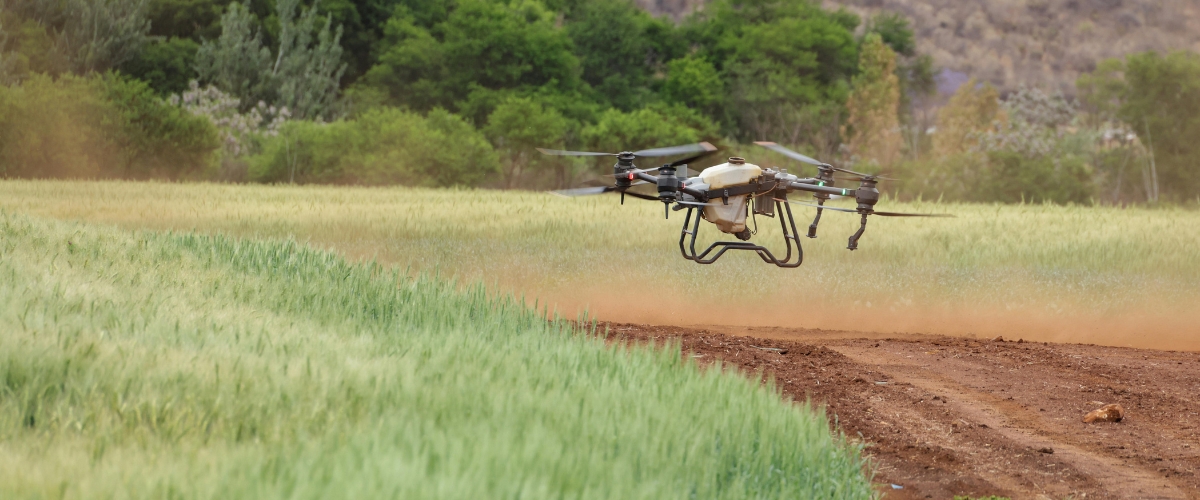
Image Courtesy: Pexels


Across American farmland, a quiet transformation is underway. Farmers are no longer relying only on gut instinct and seasonal observation to manage their fields. Drone technology in precision farming has changed the decision-making cycle entirely, giving growers access to real-time aerial intelligence that was once reserved for satellites and costly aerial surveys.
Also Read: How Drone Technology in Precision Farming Improves Pest Detection and Crop Health
Advancing Drone Technology in Precision Farming
Farm managers deploy unmanned aerial vehicles to gather comprehensive data regarding localized soil health and overall crop vitality. These advanced systems utilize multispectral imaging capabilities to identify specific field zones requiring immediate nutritional attention. According to researchers at Ohio State University, autonomous aerial units capture critical data points concerning soil characteristics to significantly increase crop production profitability. The seamless integration of such sophisticated equipment allows operators to monitor vast agricultural tracts efficiently without deploying extensive manual labor.
What Drones Can Do That Traditional Devices Can’t
Drone technology in precision farming shifts the operating model from response to anticipation. When a drone identifies early-stage root stress in the northeast quadrant of a field, a grower acts on that information the same day, not two weeks later after a manual walkthrough.
The integration of AI-driven analytics with drone platforms makes this possible. Machine learning algorithms process aerial data, compare it against historical field performance, and generate targeted intervention recommendations. For agribusinesses managing hundreds of acres, this transforms farm intelligence from a periodic report into a continuous operating advantage.
Integrating Aerial Crop Monitoring Systems
Agribusiness leaders frequently overlook the immense synergistic potential existing between legacy ground machinery and newly acquired autonomous aerial assets. Successful deployment of drone technology in precision farming requires operators to establish a continuous feedback loop between airborne sensors and terrestrial application equipment.
This collaborative analytical approach prevents the complete obsolescence of existing farm machinery while substantially elevating overall agricultural efficiency. Utilizing specialized agricultural drone spraying services alongside traditional tractors ensures rapid deployment during exceedingly narrow critical weather windows. Such strategic farm resource allocation optimization guarantees maximum return on technological investment for extremely large-scale commercial operations.
Sustaining Agricultural Profitability Standards
Deploying these advanced analytical tools directly improves sustainable farming practices across incredibly diverse agricultural landscapes globally. By pinpointing exact localized areas requiring immediate pesticide application, operators drastically reduce harmful chemical runoff into vital surrounding water systems. This remarkably precise application methodology thoroughly minimizes environmental degradation while strictly maintaining rigorous commercial crop protection standards.
Conclusion
In conclusion, systematically adopting drone technology in precision farming provides immense operational advantages for forward-thinking modern agricultural enterprises. Farmers successfully streamline their complex resource management protocols while significantly enhancing long-term environmental sustainability.
