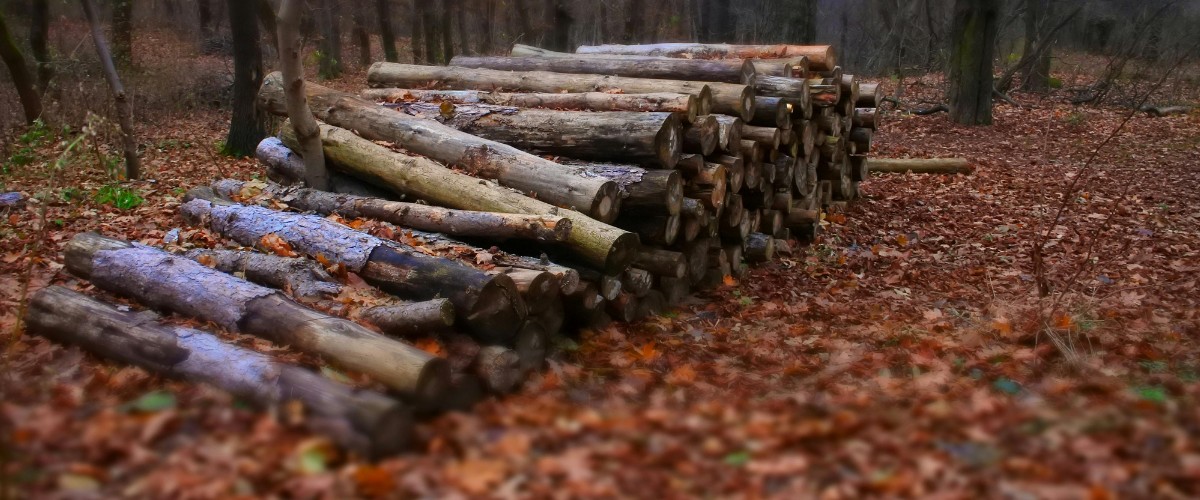





When you unwrap a new pack of printer paper or hold a wooden cutting board, you probably don’t think about forests in tropical Africa, Indonesia, Brazil, or Southeast Asia. But many of these everyday products start life in distant forests. The big question is: can we trace them back to the exact forest they came from? In most cases today, the honest answer is no or at least not well enough.
The Traceability Problem
One major reason we can’t clearly answer “where exactly did this wood come from?” is the fragmented nature of global supply chains. Raw timber and wood pulp don’t move in a straight line from forest to mill to factory. They pass through a maze of brokers, processors, traders, and exporters before becoming furniture, packaging, or wood pulp paper.
At each stage, origin details can get blurred. Wood from hundreds of small forest plots is often mixed before processing. By the time it turns into wood pulp, paper, or a finished wood product, tracing it back to a single forest plot becomes incredibly difficult.
Even companies that genuinely want to be transparent face practical hurdles. For example, the European Union Deforestation Regulation (EUDR) requires companies to provide precise geolocation coordinates for every plot where wood was harvested. That means GPS-level data for each source area. It sounds straightforward, but many suppliers still rely on paper records. Smallholders may not have digitized systems. And when sourcing spans multiple regions, the complexity multiplies quickly.
The Reality of “Transparency”
Recent industry assessments show just how wide the gap is. Among the top 100 forestry companies trading tropical wood and pulp, only about 18% disclose the country from which they source. An even smaller fraction, roughly 4%, can trace materials back to a specific forest management unit.
Without that level of detail, buyers and consumers are left to rely on certification labels such as the Forest Stewardship Council (FSC) or Programme for the Endorsement of Forest Certification (PEFC). These systems aim to promote responsible forest management, and many do good work.
But certification is only as strong as the documentation behind it. If paperwork is incomplete or falsified, problems can slip through. Investigations into illegal timber linked to parts of the Amazon rainforest have shown how fraudulent documentation can allow questionable wood, and even wood pulp paper, to enter international markets.
Why It Matters
It might feel harmless not to know the origin of your printer paper. But the lack of traceability can hide serious consequences.
When supply chains lack clear origin data, illegally logged wood can move across borders with relative ease. In some cases, mislabeled timber from sanctioned regions has ended up in European construction materials under false paperwork.
The environmental stakes are high. Illegal logging and poorly monitored deforestation accelerate biodiversity loss, contribute to climate change, and disrupt ecosystems that local communities rely on. Forest-dependent communities often lose both livelihoods and land rights when governance is weak. And when wood pulp paper is produced from poorly tracked sources, it can unintentionally support these harmful practices.
Even well-designed regulations face limits if the earliest links in the chain, forest workers and smallholder landowners, operate without consistent mapping tools, clear land titles, or digital records.
What’s Being Done
There is growing pressure for real transparency. Regulations like the European Union’s deforestation rules are pushing companies to map supply chains in detail and verify sourcing with much stronger evidence. Businesses that once relied on broad supplier declarations are now being asked for plot-level data.
Technology is playing a role, too. Some platforms are experimenting with blockchain-based tracking, GPS tagging, and digital chain-of-custody systems. These tools aim to make it harder to mix unknown wood into verified streams and easier to confirm where raw materials, including those used for wood pulp paper, originated.
At the same time, awareness among buyers is shifting. Sustainability is no longer just about a label. It’s about proof. It’s about knowing that a product came from a forest managed in a way that protects biodiversity, respects workers’ rights, and supports local communities.
We may not think about distant forests when we reach for paper or wood products. But as regulations tighten and expectations rise, the question of “where did this come from?” is becoming harder to ignore, and much more important to answer.
