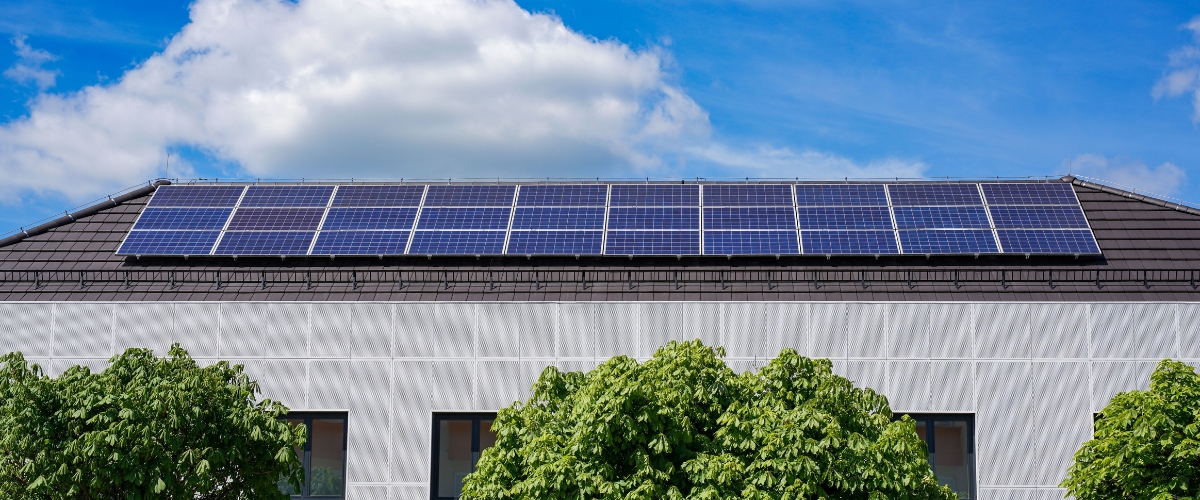





Rising cooling costs, stricter building standards, and more intense heat events are changing how contractors and property owners evaluate roofs. Today, energy-efficient roofing materials must do more than reflect sunlight. They must also support insulation, storm resilience, solar integration, and long-term operating value.
Also Read: From Waste to Walls: How Circularity Is Transforming Sustainable Construction Materials
Why Are Energy-Efficient Roofing Materials Becoming Essential?
Cool roofing remains one of the fastest-growing priorities in the building materials industry. The U.S. Department of Energy reports that a cool-colored roof can reflect up to 90% of incoming sunlight and reduce annual air-conditioning energy use in a single-story building by up to 15%.
The most practical options include:
- Reflective TPO and PVC membranes for low-slope commercial roofs.
- Cool-pigment metal panels that preserve darker colors while limiting heat absorption.
- Reflective-granule asphalt shingles for residential construction.
- Clay and concrete tile with high solar reflectance.
- Elastomeric coatings for extending the life of existing roofs.
However, reflectance alone does not determine performance. Contractors should also review thermal emittance, insulation levels, ventilation, roof orientation, and local climate conditions.
How Can Roofing Materials Support Climate Resilience?
The emerging trend is the combined roof system. Instead of selecting a material only for its surface color, project teams now assess how the roof will perform as a complete building-envelope system.
A reflective metal roof, continuous insulation, ventilated attic, and solar-ready attachment points can reduce cooling demand while preparing a building for future energy upgrades. This approach creates a stronger value proposition than simply replacing dark shingles with white ones.
The best energy-efficient roofing materials also balance durability and embodied impact. Recycled-content metal, recyclable membranes, and composite shingles made with recovered polymers can reduce replacement frequency and construction waste.
What Should Buyers Check Before Choosing A Roof?
Start with the building’s climate zone and cooling profile. Cool roofs typically deliver their strongest savings in hot and warm regions, while highly reflective surfaces may reduce useful winter heat gain in colder areas.
Ask suppliers for long-term solar reflectance values, warranty terms, maintenance requirements, and compatibility with insulation and photovoltaic systems. Property owners should also compare total lifecycle cost instead of focusing only on installation price.
Can Energy-Efficient Roofing Materials Improve Long-Term Building Value?
Yes, when designers measure performance beyond the first year. Choose roofing systems that reduce peak cooling demand, withstand severe weather, support solar installation, and remain serviceable for decades. Builders can also use cool roof guides to evaluate product suitability.
